THE NOCTURNE GEM GUIDE
Know the gem.
Then make it yours.
A better decision begins with a clearer conversation.
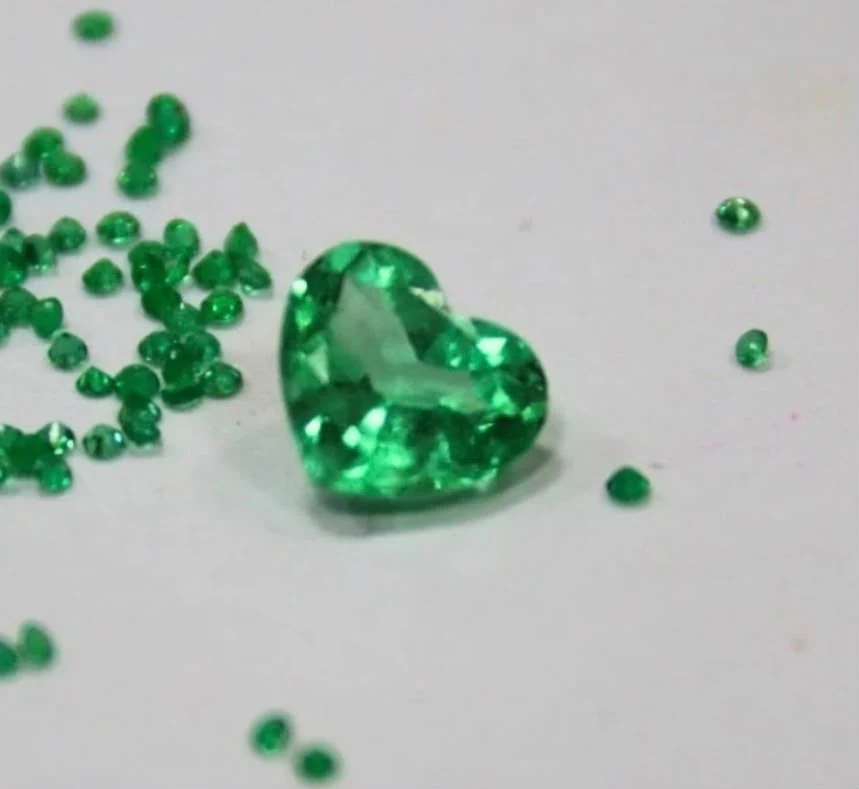
Original founder-supplied photograph. A photograph alone does not establish origin, identity or grade.
01 / HOW TO CHOOSE AN EMERALD
Look beyond the size.
Begin with the colour you enjoy, then consider how the stone looks in normal light, its proportions and the type of jewel you want to create. Weight alone cannot describe its appeal.
- Ask for current photographs or video of the actual stone, without colour-changing filters.
- Confirm measurements, weight and whether the gem is natural or laboratory-grown.
- Ask about known treatments and read the available individual report.
- Choose a setting that suits the gem, your routine and your budget.
Educational reference: GIA emerald buyer's guide. Nocturne does not diagnose a stone from a photograph.
A SHAPE FOR YOUR EXPRESSION
Eight ways to begin.
The references illustrate shapes. Actual available gems are selected and documented individually.
OUR COMMERCIAL SELECTION OPTIONS
Medium. High. Fine.
These are Nocturne's commercial selection options, not universal gemological grades or grades issued by ICG. The category for a real stone is discussed alongside its colour, size, characteristics, known treatments and price.
Medium
A starting point for a personal emerald project and an accessible budget discussion.
High
A more selective balance of the visual qualities and characteristics you prefer.
Fine
A focused selection for clients with specific visual and quality priorities.
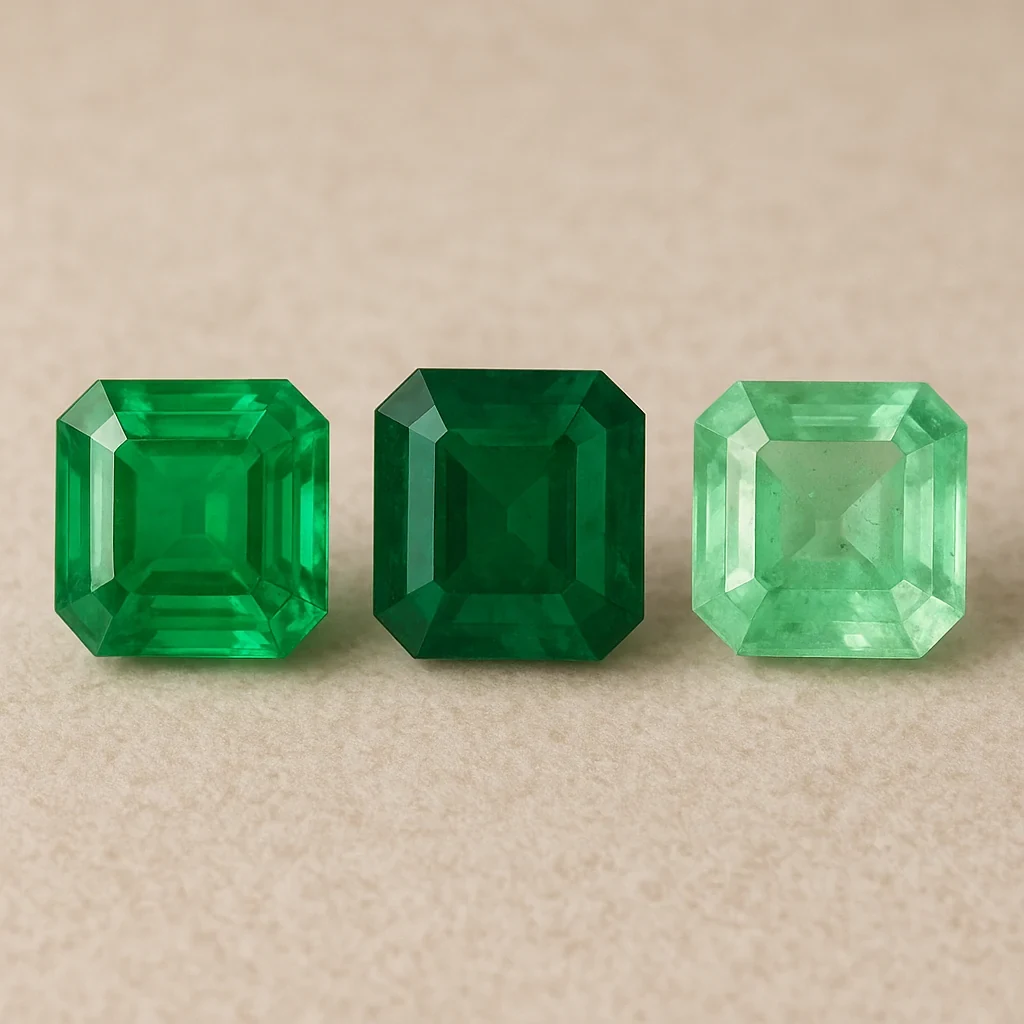
The three stones in this photograph are not assigned individual grades. Ask to see the actual options for your quote.
Your selected emerald, individually documented
Nocturne's offered emeralds are described as natural, sourced from Muzo, Boyacá, with individual reports from the Instituto Colombiano de Gemología (ICG). Review the report available for your selected stone before purchase. A geographic origin opinion is not automatically confirmation of a specific mine.
 Discuss emerald options
02 / NATURAL VS LABORATORY-GROWN
Different origins.
Clear descriptions.
Natural gemstone
Formed in nature. Identity, origin information and any known treatments should be described for the individual stone.
Laboratory-grown gemstone
Grown by people, with essentially the same chemical, physical and optical properties as its natural counterpart. It is not the same as an imitation.
Imitation or simulant
A different material chosen to resemble another gemstone. Zircon, cubic zirconia and diamonds are not interchangeable names; the exact accent material is confirmed in the quote.
Educational reference: GIA emerald overview. For accent stones, natural diamonds and laboratory-grown diamonds are quoted as distinct choices.
03 / UNDERSTANDING EMERALD TREATMENTS
Ask what is known.
Some emeralds undergo clarity enhancement. Treatment is a separate question from whether the stone is natural.
Ask which treatments are known, whether an available report records them and what care they require. Oil or other fillers can affect handling and cleaning. Do not assume “untreated” because a stone looks clear or has inclusions.
Reports should be read in their own terms. If information is not available, ask before confirming the order rather than relying on a general description.
Educational references: GIA introduction to gem treatments and emerald care.
Read the care guide ↗04 / CHOOSING A GEM FOR CUSTOM JEWELLERY
Start with the stone
and the way you live.
The gem's dimensions guide the setting. Your ring size, preferred silhouette and daily routine guide the proportions. Delicate does not have to mean impractical, but the construction must be suitable for the real gemstone.
Send us a favourite design and tell us how you intend to wear it. We will discuss the gem, metal, accents and feasibility before the final quote. If you already have a gemstone, ask whether we can consider it for your project; acceptance is confirmed individually.
Build your design brief ↗